
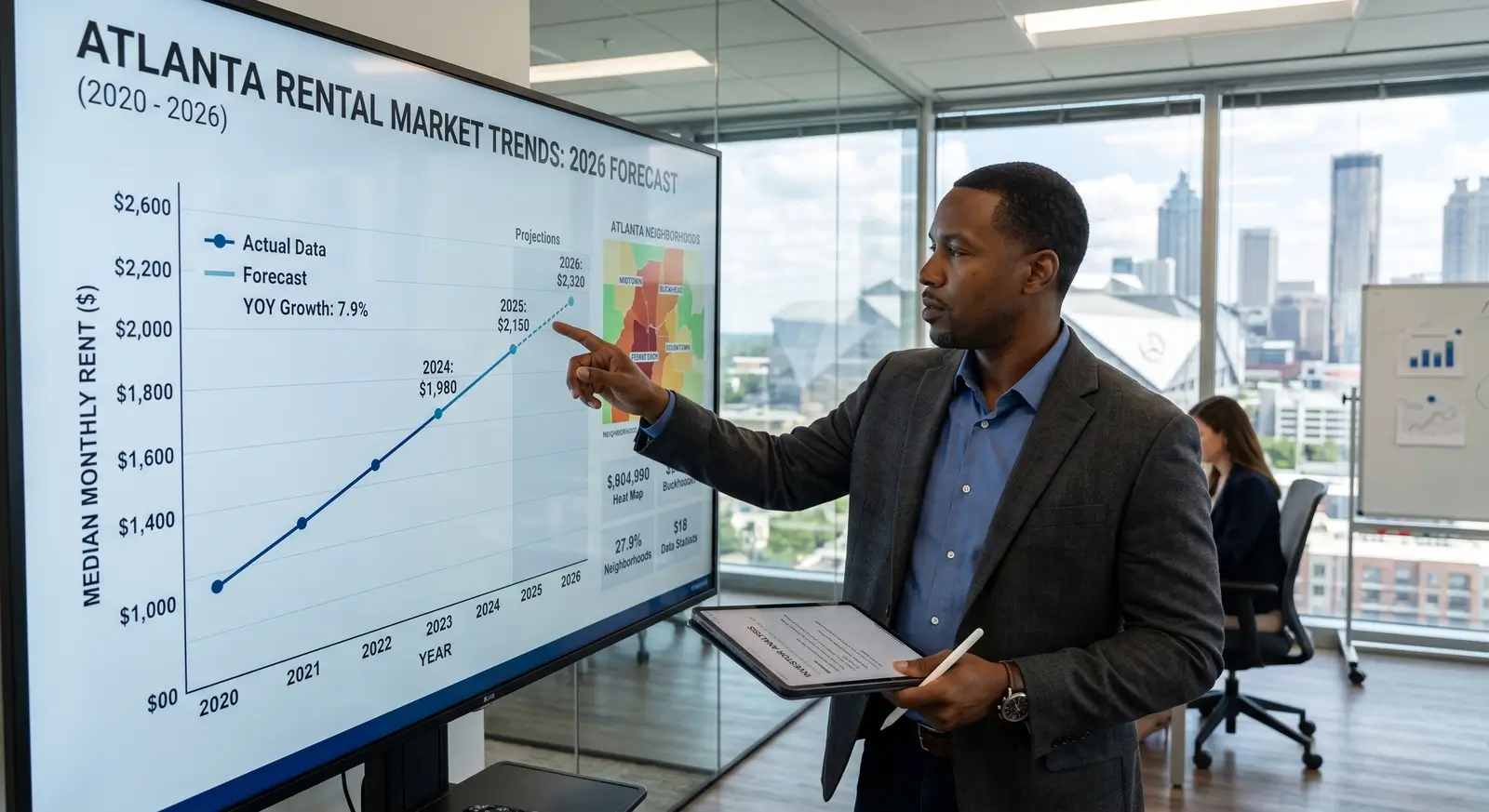
Atlanta's rental market just hit a genuine turning point. After two straight years of rent declines driven by a historic apartment construction boom, the numbers finally moved in the other direction this year.
For out-of-state investors observing from afar, this development is significant; however, it is equally important to grasp the precise reasons behind the change and to understand the direction in which it is headed next.
We oversee rental properties throughout the Atlanta metropolitan area on behalf of a significant number of out-of-state owners, and here is what the latest data indicates as we approach the year 2027.
Key Takeaways
- Atlanta posted its first positive year-over-year rent growth reading in two years during the second quarter of 2026, following an extended construction-driven downturn.
- Apartment construction has slowed dramatically, with units under construction now around 2.7 percent of inventory, down from a peak above 8 percent in 2023.
- CBRE's 2026 investor survey ranked Atlanta the second most attractive multifamily investment market in the country, up two spots from the prior year.
- The gap between average rent and a typical mortgage payment still favors renting by more than $1,000 a month, supporting continued rental demand.
- Out-of-state owners must also account for Georgia's HB 399, which requires hiring a licensed local property manager for single-family and duplex rentals.
The Construction Wave Is Finally Slowing
Atlanta's rental market spent the past two years absorbing the effects of a historic apartment construction boom. Units under construction have fallen to roughly 2.71 percent of total inventory, down sharply from a peak of 8.37 percent in the first quarter of 2023. Statewide forecasts suggest Atlanta will see its lowest annual completions since 2014 as the pipeline continues to taper.
This is particularly important for out-of-state investors, as a reduction in the number of new rental units entering the market typically enhances both occupancy rates and rental pricing power for existing properties over the coming years.
Rent Growth Just Turned Positive Again
Average effective apartment rent in Atlanta reached $1,594 in the second quarter of 2026, up 0.18 percent year over year. Modest as that sounds, it marked the first positive year-over-year rent growth reading after two consecutive years of declines driven by oversupply.
Metro-wide vacancy sat at 5.86 percent in the same quarter, down from 6.45 percent earlier in the year and forecast to end 2026 near 5.6 percent, a sign the market is genuinely tightening rather than just stabilizing at a high level.
Why Investors Are Suddenly More Bullish
CBRE's 2026 investor survey ranked Atlanta the second most attractive multifamily investment market in the entire country, up two spots from the previous year. That kind of institutional confidence tends to follow, not lead, real fundamental improvement, which lines up with the construction slowdown and rent growth reversal happening at the same time.
Statewide, Georgia rent growth is forecast at 3 to 5 percent annually through 2027, with Atlanta specifically projected closer to 2 to 4 percent as the market normalizes after its supply-driven downturn.
The Affordability Gap Still Favors Renting
Atlanta entered 2026 with an affordability gap of more than $1,000 a month between average effective rent and the mean monthly mortgage payment on a comparable home. With mortgage rates expected to stay volatile, this gap continues to push a meaningful share of would-be buyers toward renting instead, which supports sustained rental demand independent of the supply story.
Where the Best Numbers Actually Are
Not every Atlanta submarket tells the same story. South Fulton continues to offer some of the strongest rent-to-price ratios in the metro, with home prices in the $200,000 to $280,000 range against rents of $1,500 to $1,800. In-town neighborhoods near the Beltline have matured into stable, high-demand rental markets with three-bedroom homes renting for $1,800 to $2,400.
What This Means for Out-of-State Buyers Specifically
Beyond the market fundamentals, out-of-state investors buying single-family or duplex rentals in Georgia need to account for HB 399, which requires hiring a Georgia-licensed property manager. Our HB 399 breakdown covers exactly what this requirement involves and how to stay compliant.
Frequently Asked Questions
Is Atlanta's rental market actually improving in 2026?
Yes, based on the latest data. Rent growth turned positive for the first time in two years, vacancy is tightening, and new construction has slowed considerably from its 2023 peak.
Why did Atlanta rents decline for two years before this turnaround?
A historic wave of apartment construction outpaced demand for an extended period, pushing vacancy up and rents down as the market absorbed the new supply.
Is it still cheaper to rent than buy in Atlanta?
Generally, yes. The gap between average rent and a typical mortgage payment still favors renting by more than $1,000 a month, which continues to support rental demand.
Which Atlanta submarkets offer the best rental yields right now?
South Fulton currently offers some of the strongest rent-to-price ratios in the metro, while intown neighborhoods near the Beltline offer stable, higher-rent demand from a more established tenant base.
Do out-of-state investors face any special requirements in Georgia?
Yes. Georgia's HB 399 requires out-of-state owners of single-family and duplex rentals to hire a Georgia-licensed property manager, a requirement that took effect in 2025.
Let Us Help You Navigate This Market
Atlanta's rental market is showing genuine signs of turning a corner heading into 2027, but the opportunity varies significantly by submarket and property type.
At Omyra Property Management, we help out-of-state owners navigate exactly this kind of shifting market with real local data. If you are considering an Atlanta investment or already own property here, request a free rental analysis, or explore our owner resources to see how we support investors through this transition.